The Navajo Nation & Its Century-Long Fight For Water Rights
The Navajo Nation spans 27,000 square miles in Arizona, Utah, and New Mexico and has 400,000 registered tribal members, with approximately 200,000 living within the borders, making it the largest and most populous reservation in the country (Navajo Nation Profile, n.d.). This is a substantial number of people living in an isolated, oftentimes beautiful yet barren landscape, plagued by drought due to climate change. A textbook definition of a marginalized group––an indigenous community, historically oppressed, a large portion of whom live beneath the poverty line––the Navajo Nation was disproportionately affected by COVID due to a limited access to running water and infrastructure such as wells and indoor plumbing, placing tribal members at heightened risk of exposure to the virus (Raffio, N., 2023). As the crow flies, this region is not far away–– just a few more hours south of Moab––and yet it sure feels that way when one is squarely positioned just down the road from Aspen. There is, however, a thread that connects us, and this is, of course, the Colorado River. Established by treaty in 1868, the Navajo Nation exists almost soley within the drainage basin of the Colorado. The lingering toxicity of colonialism is alive and well for this tribe; this can be seen through the lack of water rights to the Colorado to which they are entitled.
According to the 1908 Winters Doctrine, all tribal lands are legally entitled to water rights, yet these rights have never been quantified nor delivered to the Navajo Nation, a real problem when a reservation is located in a desert. 1 in 3 Navajo homes lack access to running water including clean drinking water; a significant portion of the reservation residents must haul water from communal wells and for long distances to meet basic daily needs (Raffio, N., 2023). For perspective, the majority of of Colorado River water consumption in the Southwest goes to irrigation for livestock feed such as alfalfa.
If you were surprised to learn this, it’s a good indication that this subject is worthy of examining through the lens of ecojustice social work, as it aligns with our social worker ethics to amplify the voices of the Diné, the traditional name of the Navajo People, and build awareness of an environmental injustice that has been in place for way too long.
Photo Credit: Jessica Gresko
“Water hauling is practiced by 41% of Navajo households. Of those hauling for household purposes, 73% are using the minimum amount of water needed for health and well-being (<13 gallons per person per day). Over a third of those households are using less than 4 gallons/person/day, the minimum required for survival. The burden of water hauling is falling mostly on elders, with over 60% of primary haulers aged 55+” (Johns Hopkins, 2023).
Stakeholders in the fight for water rights include tribal leaders, state officials, cities within the reservation, ranches that use the water for agriculture, water districts and entities like the Ten Tribes Partnership, which unites tribal nations to advocate for water. In the collective mind of the Navajo people, the Colorado River water is theirs to use, as they have been using it since before the river was named the Colorado (Mullane, S., 2025). Unfortunately, Manifest Destiny brought the federal water rights and laws to the West, and the systemic, oppressive nature of colonialism means that sovereign tribal nations must play by rules that are not designed in their favor.
The Navajo Nation has been doing legal battle for over 100 years to have their basic water rights honored, including a long-running U.S. Supreme Court case, Arizona vs Navajo Nation, which began in 2003 and ended 20 years later, with the decision made that, while acknowledging that tribal nations have water rights as per the Winters Doctrine to “ensure their reservations are “livable and productive,” the federal government has no obligation to “have an affirmative treaty or trust obligation to identify and account for Navajo Nation water rights in the Colorado River” (NARF, 2023).
“Water is necessary for all life, and when our ancestors negotiated agreements with the United States to secure our lands and our protection, water was understood and still is understood to be inseparable from the land and from our peoples. Today, the Supreme Court has once again assisted in the United States’ centuries-long attempts to try to get out of the promises they have made to Tribal Nations by stating that treaties only secure access to water, but do not require the United States to take any steps to protect or provide that water to our people.” Fawn Sharp, President, National Congress of American Indians (NARF, 2023)
Most recently, the Northeastern Arizona Indian Water Rights Settlement Act would have supplied the NN with rights to about 48,300 acre-feet of Colorado River water in Arizona, which would help mitigate the lack of running water in so many households. What was noteworthy about this act was that all of the Colorado Basin state governments were in favor of it. However, they could not reach a detailed consensus before the end of the legislative session, due to the complexity of the water laws in the region (Mullane, S., 2025). The idea of this type of legislation smoothly passing through Congress in 2025 seems far-fetched…but the severe economic and public health challenges the Navajo People perpetually face mean the fight must and will continue. Layered on top of the complexity of water law is the fact that not only is every drop of water precious in a desert ecosystem, climate change has resulted in longer periods of drought in the American Southwest, and this impacts more vulnerable populations like the Navajo the most (Cook, B.I., 2021).
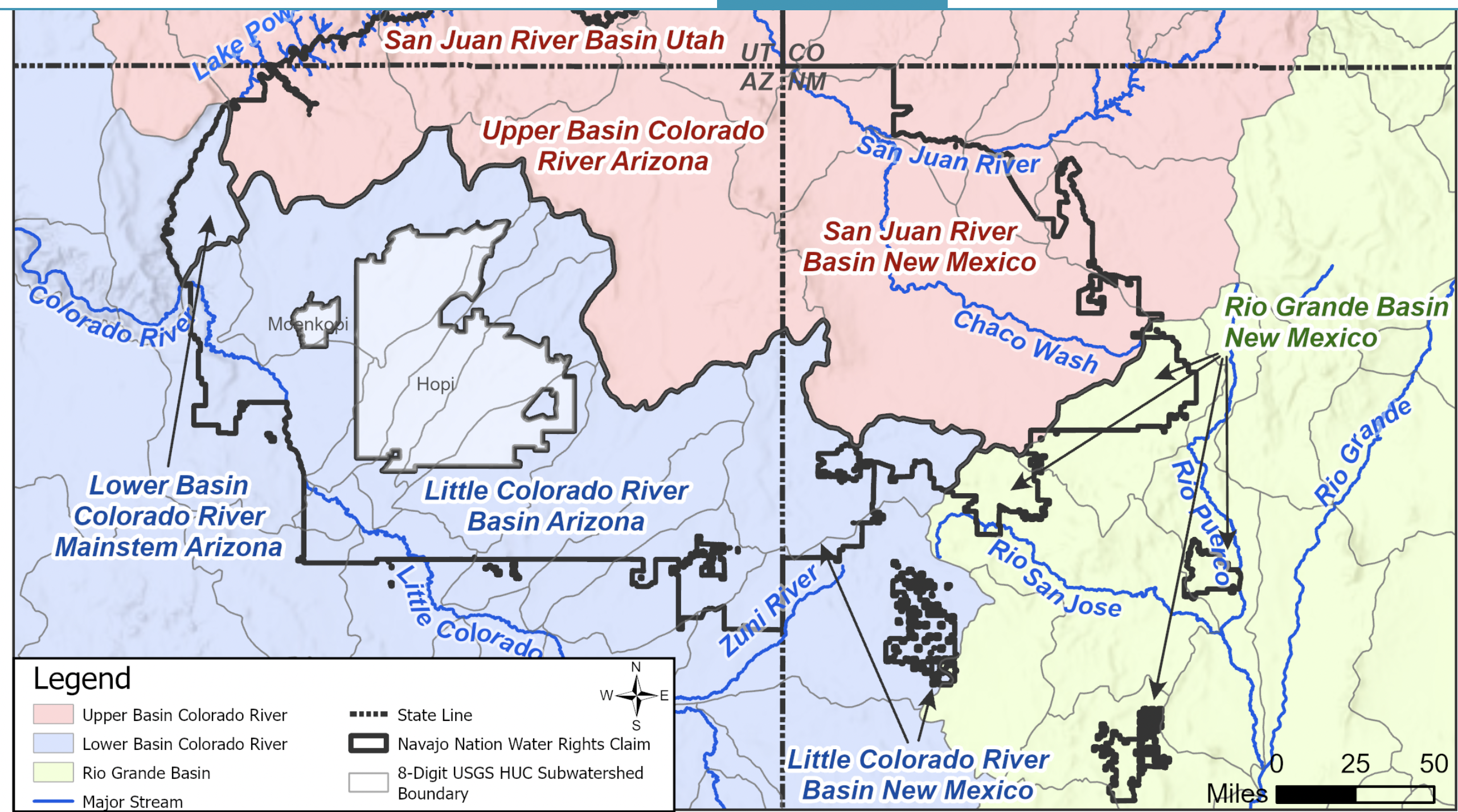
Map of Navajo Nation Water Rights Claims, credit: Navajo Nation Water Rights Commission (NNWRC)
If you’re scratching your head trying to figure out this map, you’re not alone! This is a visual representation of how complex water claims are on the Colorado. It’s divided up into the Upper and Lower Basins of the Colorado, and those have their own sub-basins and tributaries. Then of course there’s state boundaries and regulations to navigate. The Navajo Nation is constantly trying to resolve many different water claims in many different regions within the Colorado watershed (NNWRC, n.d.). And unless you’re in the policy world, most of us in Colorado are largely unaware of all of this.
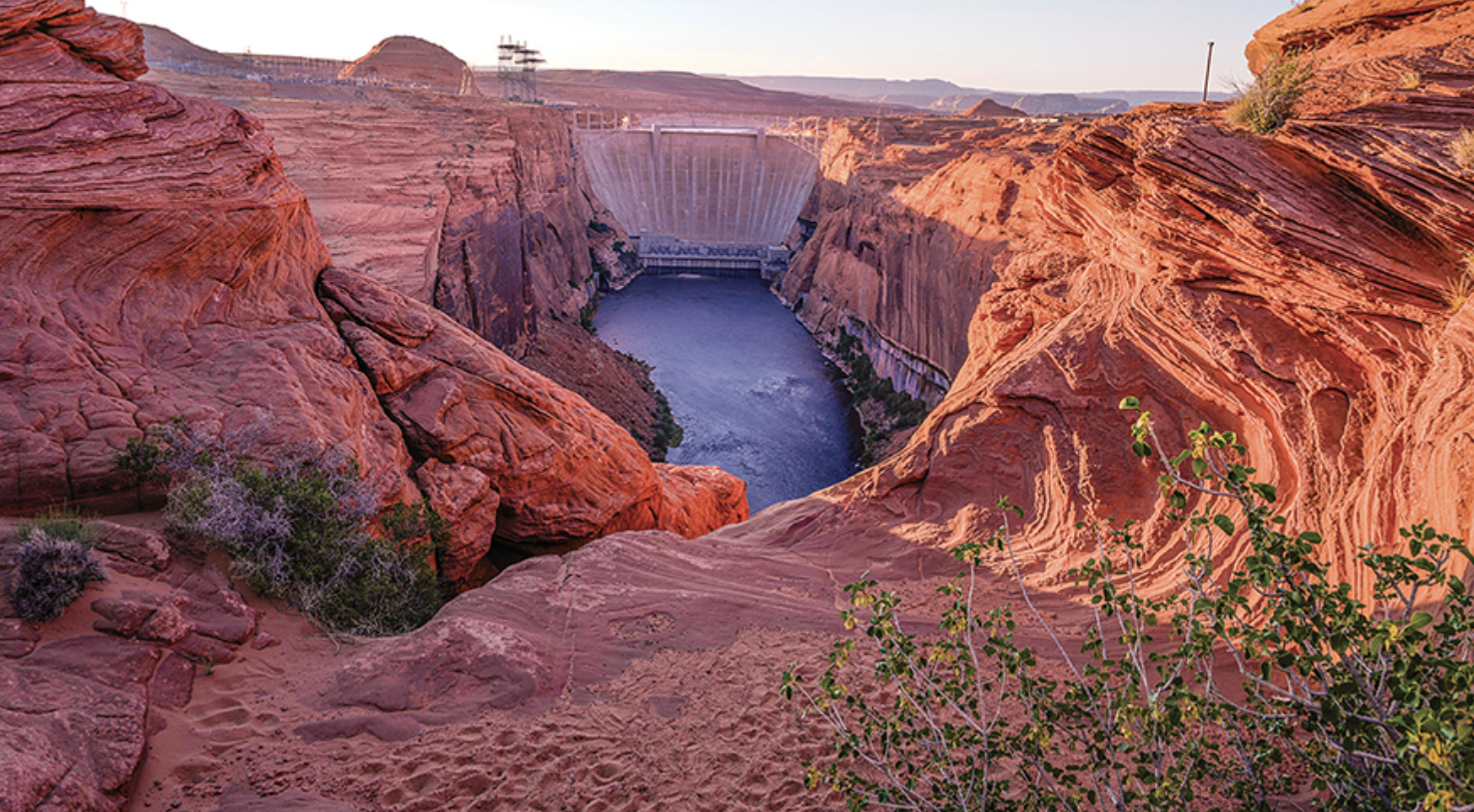
It would take multiple blogs to address the various other issues related to the Colorado River such as what dams have done to the river ecosystem, but I digress…
Photo Credit: Donovan Quintero
Social Workers Have the Power to Amplify Marginalized Voices
Here are some ways we mountain town social workers can give a voice to those just downstream from us:
Micro • Gather stories from willing tribal members to humanize the issue and build awareness of why advocacy is needed. Mezzo • Partner with local NGOs like The Roaring Fork Conservancy to deepen an understanding of “water justice” and the importance of looking beyond our immediate mountain region to the larger American Southwest of which we are a part. • As residents of a “Basin state,” support grassroots efforts like petitions and community education nights to support Colorado River water justice effort for the Navajo Nation and other indigenous tribes of the Southwest. • Learn more about and support organizations such as the Navajo Water Project and the Colorado River Basin Tribal Coalition. Macro • Advocate for federal and state policy change which upholds treaties and court decisions that secure tribal water rights and support equitable water distribution.
Social Workers Stay Hopeful! Stay on the lookout for the glimmers of small victories such as the creation of advocacy organizations like the Navajo Water Project and the passing of the 2023 CRIT Water Resiliency Act, which, while flawed, is helping move the needle on economic security for indigenous peoples (Arcoite, B. & Burkley, O., 2024). Know that you promote the ripple effect of awareness building whenever you engage in dialogue about water sovereignty both online and in-person.
“In the same way, establishing Indigenous sovereignty over their rightful water claims will likely bolster the protection of natural resources, including the Colorado River system. Native stewards of the land have managed and protected resources for millennia, generating place-based insights and leveraging Traditional Ecological Knowledge to promote balance and resilience. It is currently estimated that Indigenous Peoples, although representing 5% of the Earth’s population, protect 80% of its biodiversity. Therefore, as water scarcity in the Western U.S. becomes an increasingly pertinent issue, there are many reasons to seek more meaningful legal recognition of Indigenous sovereignty and value systems in the Colorado River Basin.” (Arcoite, B. & Burkley, O., 2024)


 #WestCOMSW