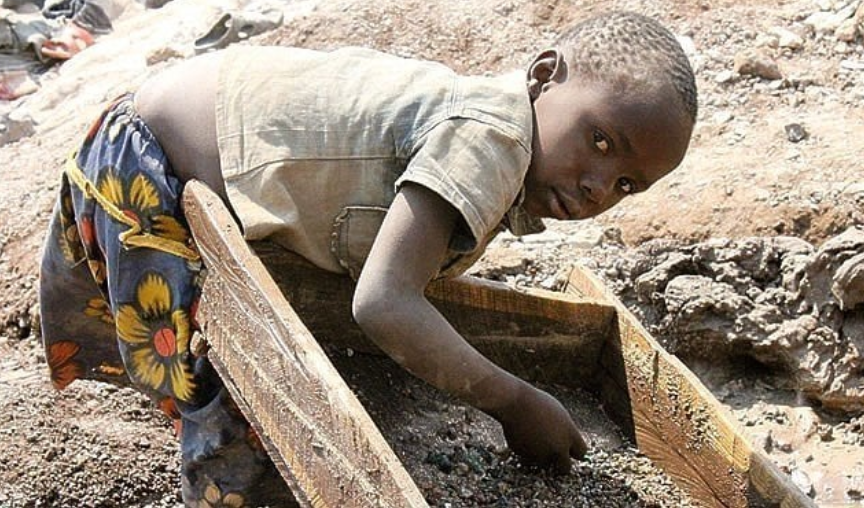
Photo: Child Mining Cobalt in DRC Mines. Photo/Courtesy: Change.org
We carry the harm in our pockets. Cobalt is a shiny blue metal that powers our phones, laptops, and electric cars. It’s what keeps our devices alive and our push for “green” energy moving forward. But behind the scenes, cobalt is destroying lives, especially in the Democratic Republic of Congo (DRC), where more than 70% of the world’s cobalt comes from. The truth is, cobalt is bad for the DRC’s economy, bad for their local communities, bad for children, bad for the planet, and bad for our collective humanity.
The DRC is sitting on trillions of dollars in natural resources, yet it remains one of the poorest countries in the world. How? Corruption, foreign exploitation, and a complete lack of investment in the Congolese people. Multinational corporations and smuggling networks profit off Congo’s cobalt while DRC communities live without clean water, health care, or safe schools. The wealth flows out, while poverty and instability remain.
In unregulated, artisanal mines, children as young as six are sent into narrow, dangerous tunnels to dig for cobalt by hand. They’re exposed to toxic dust, collapse risks, and exhaustion—all for less than a few dollars a day. These children should be in school, not risking their lives to power someone’s iPad. Instead of building a future, they are being robbed of one.
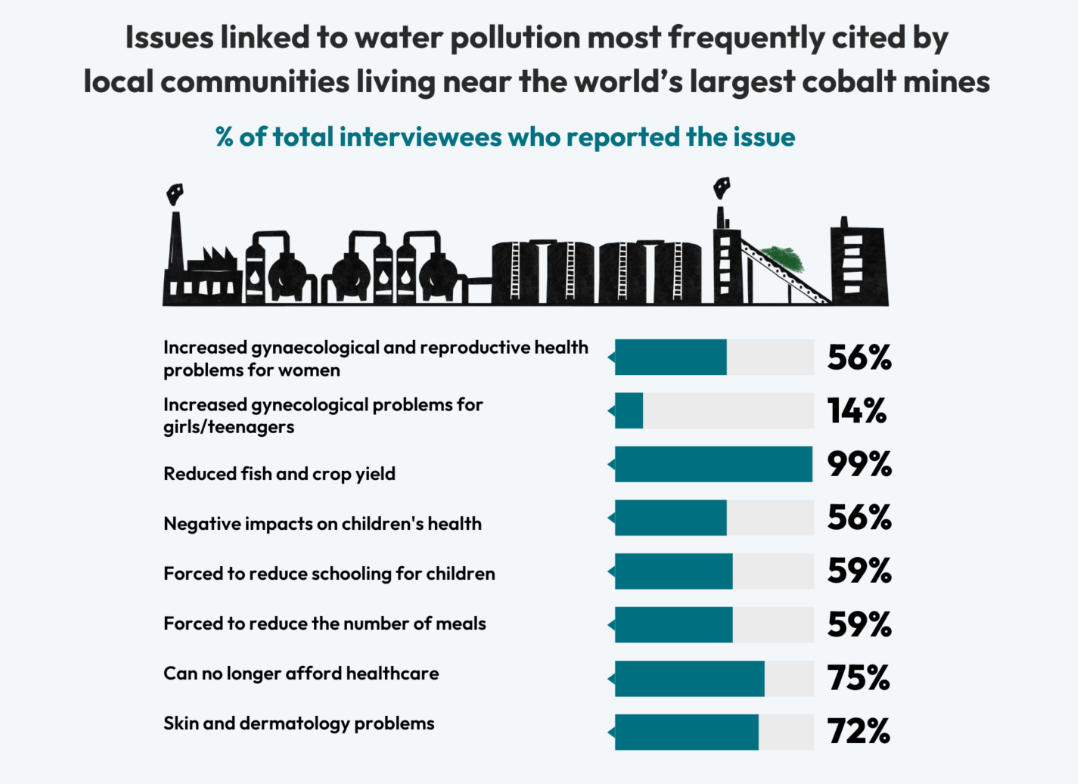
Living near cobalt mines isn’t just dangerous—it’s deadly. Studies show high rates of birth defects, chronic respiratory problems, and heavy metal poisoning in communities near cobalt operations. Toxic waste leaks into water sources. The air is filled with dangerous particles. Pregnant women, babies, and elders are paying the price of a resource they will never benefit from.
Cobalt mining in the DRC is a textbook example of environmental racism. Black communities in Congo are forced to live and die in conditions that would never be tolerated in wealthier, whiter parts of the world. As the world races toward electric vehicles and “green” solutions, it’s important to ask: green for whom? While Apple, Tesla, and other major corporations market sleek, sustainable tech, they rely on a supply chain rooted in violence and exploitation. China controls much of the cobalt trade. Western companies benefit from low prices. Meanwhile, the Congolese people remain trapped in cycles of poverty and dispossession. The world applauds innovation while ignoring the brutal cost extracted from the Global South.
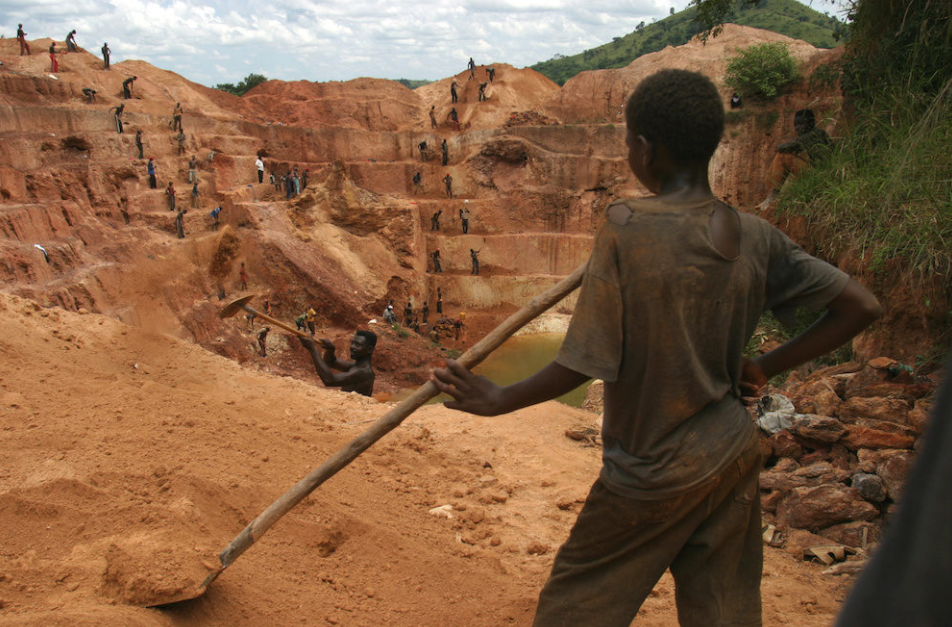
Cobalt is sold to us as progress. But for the people of the Democratic Republic of Congo, it’s devastation in disguise. Children are being pulled out of classrooms and into toxic mines. Families are being displaced overnight and “forcibly evicted without consultation or compensation” (Amnesty International), so companies can dig into their land. Rivers and wells once used for drinking and bathing are now laced with heavy metals and industrial waste, leading to “significant health problems, including birth defects, skin conditions, and respiratory illness” (RAID). Entire communities are choking on the dust of a mineral they will never profit from.
While the world races to electrify the future, the DRC is stuck in the past: plundered, poisoned, and left behind. It is a country rich in resources but robbed of power. Every time we tap our screens or plug in our electric vehicles, we must ask ourselves: Who is paying the price for our convenience?
Until justice is woven into the supply chain, cobalt will remain not a symbol of innovation, but a symbol of exploitation.
What can we do?
- Raise awareness. Talk about where your technology comes from. Don’t let cobalt stay invisible.
- Push for ethical sourcing and corporate accountability.
- Support Congolese-led advocacy and sovereignty efforts.
- Hold governments and companies accountable for human rights abuses.
Sources
- Gross, T. (2023, February 1). How “modern-day slavery” in the Congo powers the rechargeable battery economy. NPR. https://www.npr.org/sections/goatsandsoda/2023/02/01/1152893248/red-cobalt-congo-drc-mining-siddharth-kara?utm_source=chatgpt.com
- Today, N. (n.d.). Greedy Forty-Niners: The ugly side of the Congo Cobalt Rush. Nax Today. https://nax.today/features/article/733/greedy-forty-niners-the-ugly-side-of-the-congo-cobalt-rush
- Zainab. (2024, December 16). New report exposes the environmental and human costs of DRC’s cobalt boom. RAID. https://raid-uk.org/report-environmental-pollution-human-costs-drc-cobalt-demand-industrial-mines-green-energy-evs-2024/
- Adebayo, T. (2023, September 12). Congo communities forcibly uprooted to make way for mines critical to EVs, Amnesty report says | AP News. AP News. https://apnews.com/article/congo-mining-human-rights-73b3edcc2d485d07281db34dc3dcad2c
- Rampant cobalt smuggling and corruption deny billions to DRC | ISS Africa. (n.d.). ISS Africa. https://issafrica.org/iss-today/rampant-cobalt-smuggling-and-corruption-deny-billions-to-drc?utm_source=chatgpt.com
- Kelly, A. (2022, October 19). Children as young as seven mining cobalt used in smartphones, says Amnesty. The Guardian. https://www.theguardian.com/global-development/2016/jan/19/children-as-young-as-seven-mining-cobalt-for-use-in-smartphones-says-amnesty
- Niarchos, N. (2021, May 24). The dark side of Congo’s Cobalt rush. The New Yorker. https://newyorker.com/magazine/2021/05/31/the-dark-side-of-congos-cobalt-rush
 #WestCOMSW